In Bologna, democratic participation is rethought with artificial intelligence
12/03/2026 Francisco Alacio
Thanks to the technology developed by the iDEM project, an innovative and inclusive path is set out to make civic assemblies more accessible
Link to iDEM’s recommendations for increasing accessibility in democratic processes
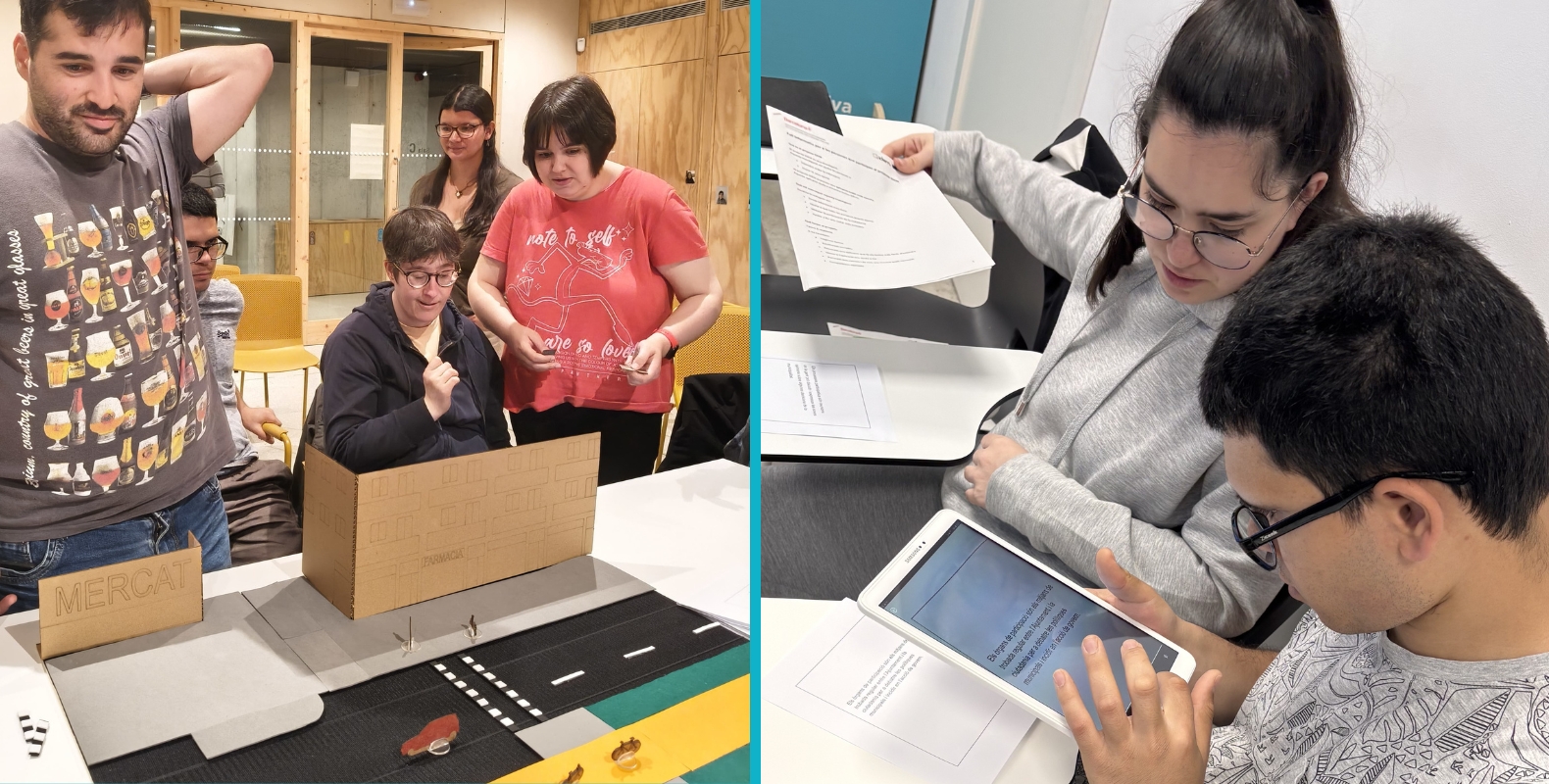
Bologna is getting ready to try out a new form of democratic participation. On 21 February, a unique deliberative process in Italy kick off in the city, promoted as part of the European research project “iDEM – Innovative and Inclusive Democratic Spaces for Deliberation and Participation”. The initiative, implemented by ActionAid Italia, Anffas Nazionale, Anffas Bologna and Cooperativa Sociale Bologna Integrazione with the support of the Municipality of Bologna, will involve people with intellectual disabilities and people from different linguistic backgrounds in six meetings for discussion and proposals. At the heart of the process is the development of recommendations for the Municipality to make the civic assemblies of the neighbourhood centres more accessible.
«We are grateful to ActionAid and Anffas for this initiative: for the Municipality of Bologna, it is a concrete opportunity to rethink participation starting from differences, decolonising processes and languages by equipping ourselves with tools that can recognise the voices of those who are too often marginalised by linguistic, ableist and cultural barriers. Making civic assemblies and neighbourhood centres more accessible means transforming spaces, places and policies so that every person has the dignity of a voice and a listening ear,» say Erika Capasso, delegate of the Municipality of Bologna for neighbourhood centres and new citizens, and Roberta Toschi, delegate for disabilities.

During the meetings, participants will test an artificial intelligence-based application capable of transforming complex texts into accessible versions through the use of simple language, thus facilitating understanding and access to decision-making processes. Language barriers are a real obstacle to democratic participation: in Europe, around 6 million people have difficulty reading, writing and understanding, which limits their full participation in public life; worldwide, the estimate is over 90 million. The Italian use case – together with the use cases underway in Spain – addresses this gap by working on simplifying administrative language.
“Having accessible information, as also indicated by the UN Convention on the Rights of Persons with Disabilities, means guaranteeing equal rights and opportunities for people with intellectual disabilities and neurodevelopmental disorders by countering ‘invisible barriers” that limit access to services, culture and social participation: accessibility, in fact, concerns not only physical spaces, but also the way in which information is communicated. Easy-to-read language makes content clearer and more understandable, promoting autonomy, participation and choice. Promoting accessible information and communication means contributing to the construction of a more inclusive society, in which every person can understand, express themselves and participate fully,» says Roberto Speziale, President of Anffas Nazionale.
The iDEM project develops artificial intelligence-based tools to make public information more accessible. In particular, it uses Natural Language Processing (NLP) technologies to simplify complex bureaucratic documents by testing multilingual models designed to broaden access to information. The project combines technological development with analysis and field testing to understand and overcome the causes of exclusion from deliberative processes.
“The fairness of democratic processes is measured by their ability to truly represent all communities. This means hearing the perspectives of those who are marginalised in public debate and therefore less visible. Decision-making processes should start with a simple but fundamental question: who is missing? Only in this way can we build a more just and inclusive democracy” says Katia Scannavini, Co-Secretary General of ActionAid Italy.
iDEM (Innovation and Inclusive Democratic Spaces for Deliberation and Participation) is an interdisciplinary consortium funded by the European Union’s Horizon Europe programme. Led by Pompeu Fabra University in Barcelona, it involves 12 partners across Europe with the aim of creating technological solutions and intervention models to reduce language barriers in democratic life. In Italy, the project is curated by ActionAid International Italia E.T.S. and Anffas Nazionale ETS/APS.
For more information, visit idemproject.eu