iDEM drives a more inclusive democracy with practical recommendations on the use of AI in public institutions
21/09/2026 admin
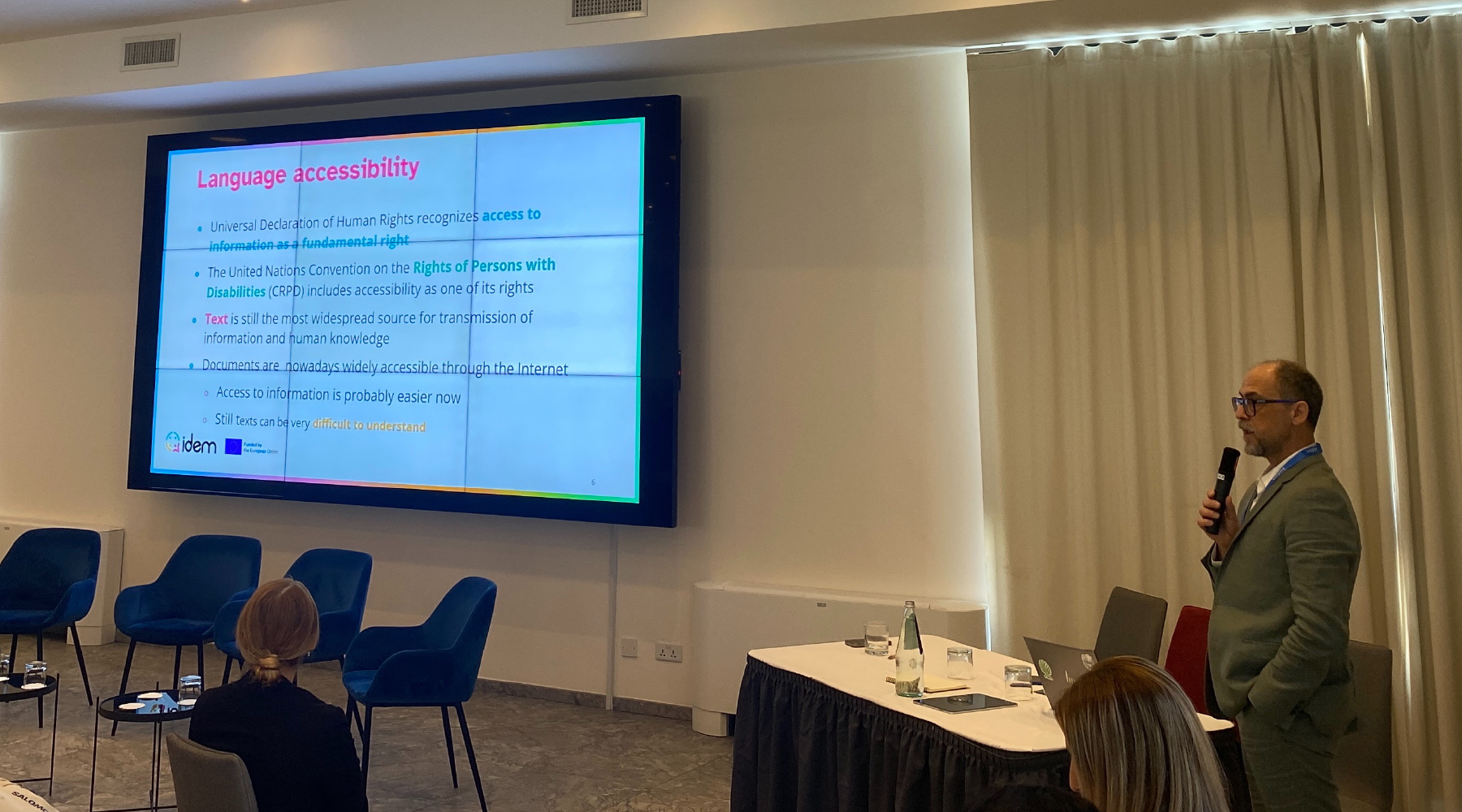
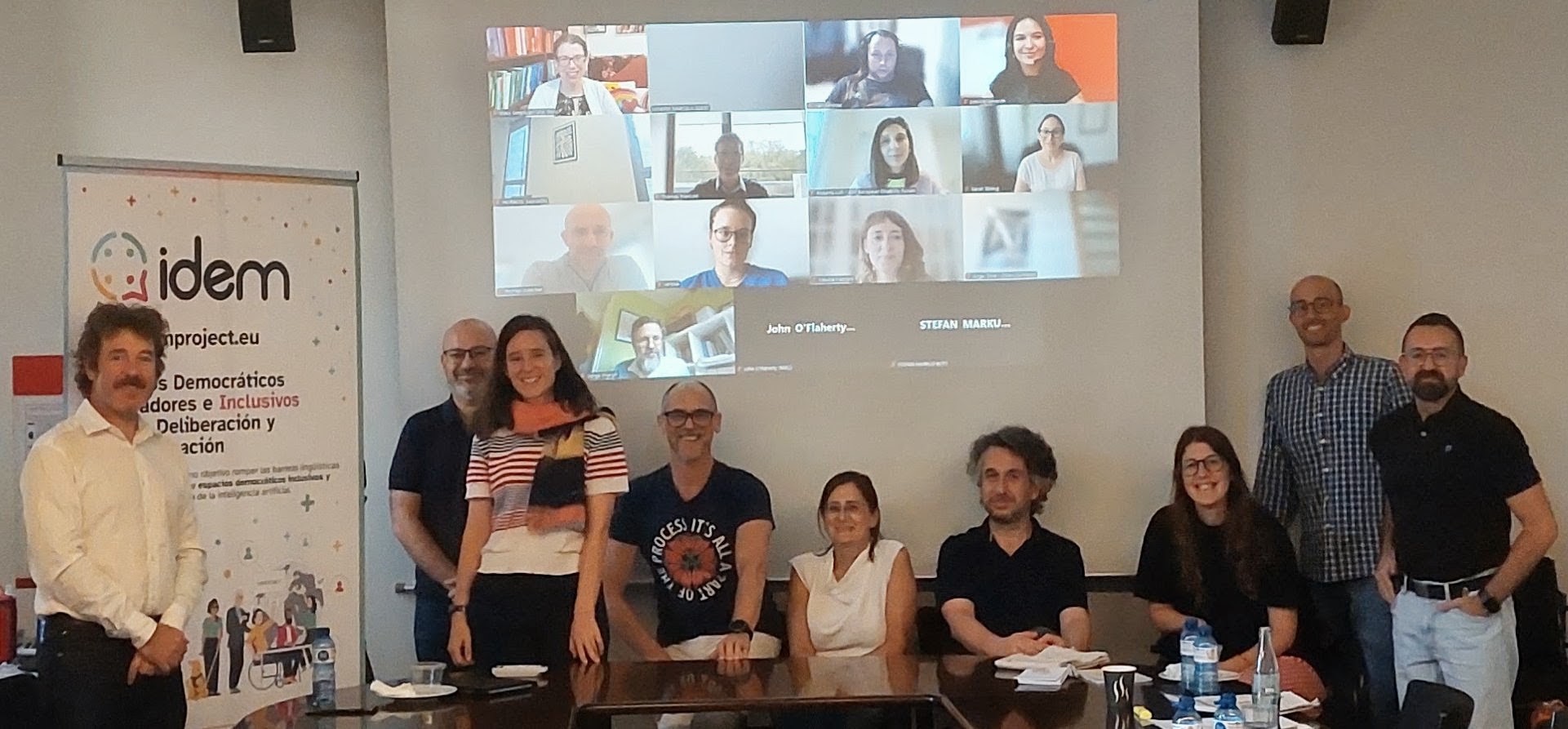
On 17 September, the European project iDEM held a hybrid Round Table to share the project’s progress and present the results of its three Use Cases, developed in Las Rozas, Bologna and Barcelona. The event brought together representatives from a wide range of sectors around a shared question: how can institutions use technology and artificial intelligence to build democratic spaces that are more open, accessible and participatory for everyone?
Three cities, one shared goal
The Las Rozas, Bologna and Barcelona cases have been the foundation of iDEM’s work. Drawing on them, the project has analysed how to design more innovative and inclusive democratic processes, capable of bringing different citizen realities into deliberation and public decision-making. These experiences have made it possible to identify what works, which barriers remain and what changes are needed for participation to be truly meaningful.
A policy brief designed for action
One of the key moments of the day was the presentation and discussion of the policy brief Practical Recommendations for Public Institutions on the Use of Digital Tools and AI. The document sets out fifteen recommendations for public administrations and bodies seeking to promote more inclusive, accessible and meaningful participation, especially when their processes incorporate digital tools and artificial intelligence.
Among them, the brief highlights the importance of building inclusion into the process from the outset and investing resources in it, establishing minimum inclusion and accessibility standards for every process, and providing clear information through multimodal communication. It also focuses on training facilitators, recognising diverse forms of communication as valid contributions, and preventing domination and paternalism. With regard to technology, it argues that digital tools and AI should support people’s comprehension and expression without replacing their judgement, and that they should be tested with real users before being relied upon.
The commitment of the Ministry of Youth and Childhood
The event featured a speech by Rubén Pérez Correa, Secretary of State for Ministry of Youth and Childhood of the Government of Spain, who thanked Fundación Cibervoluntarios, the university and the project’s external advisory board for their work. He noted that iDEM’s recommendations align with the Ministry’s work and that digital accessibility and the simplification of information are part of a wider debate on democracy in digital environments and children’s rights within them.
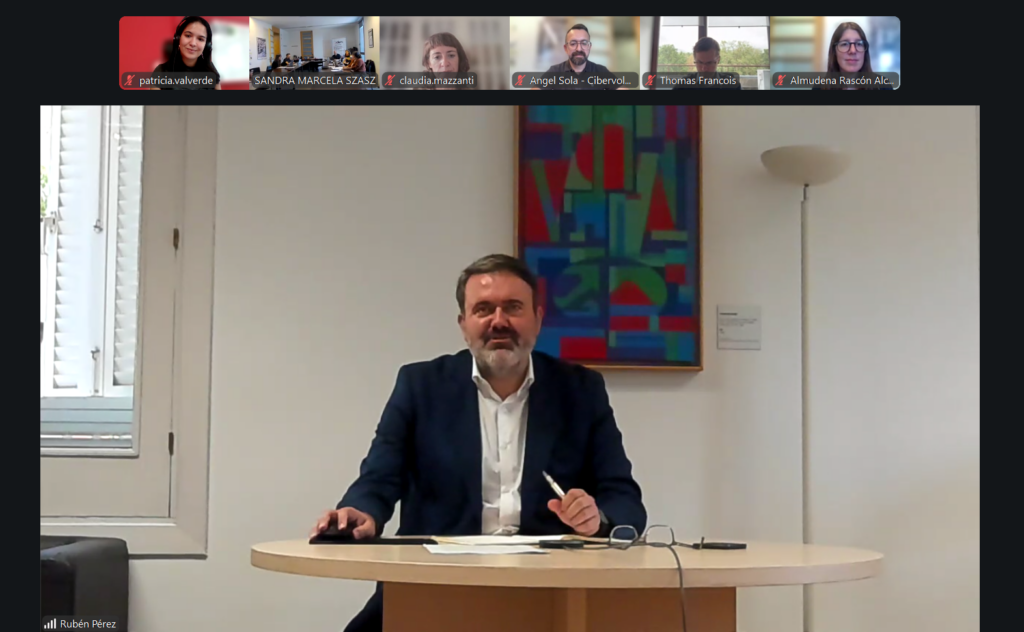
The Secretary of State pointed out that many of these proposals will require the Ministry to adapt its own procedures, particularly to reach young people and reduce mistrust towards public administrations. He also stressed that linguistic and cognitive barriers affect not only adults but also children and adolescents.
As an example of good practice, he mentioned the State Council for Child and Adolescent Participation (Consejo Estatal de Participación de la Infancia y la Adolescencia), created in 2021 and driven mainly by young people, whose involvement was key in drafting the law on the protection of children in digital environments, currently going through parliament. In this regard, he identified two concrete ways to apply iDEM’s recommendations. The first is to review the cognitive and linguistic accessibility of the Council’s materials and calls for participation, incorporating the European Easy-to-Read guidelines. The second is to include cognitive accessibility as a criterion for all digital content aimed at minors within the forthcoming National Strategy for the Protection of Children in Digital Environments, so that children understand these policies as an improvement of their conditions in the digital world rather than simply as a ban.
Pérez Correa emphasised that any recommendation needs active implementation with measurable results in order to avoid frustration, and expressed the Ministry’s willingness to be one of the first to adopt these pillars as working priorities. He closed his speech by proposing a working meeting to turn good intentions into concrete tasks.
A multi-stakeholder dialogue
The Round Table drew strong attendance and featured a packed agenda with contributions from academia, local, regional and national governments, social organisations, accessibility experts and four related European projects. Speakers included Josep Lluís Martí, from Universitat Pompeu Fabra; Elvira Cicognani, from the INSPIRE project; Sonia Bussu, from the Sincrony project; Ismael Peña-López, expert in participation and digital democracy; Michael Donaldson, Chief Innovation Officer and Director General of BIT Habitat Barcelona; Erika Capasso, Mayor’s Delegate for New Citizenship and Neighbourhood Houses; and Lourdes González Perea, Director of AccessibleEU at Fundación ONCE, among other institutions and organisations.
Technology at the service of people
The event provided a space to compare experiences, gather expert input and move towards models of public participation that are more diverse, representative and action-oriented.