iDEM presented the results of its use case in Barcelona, proving technology can make public participation more accessible to citizens
24/06/2026 admin
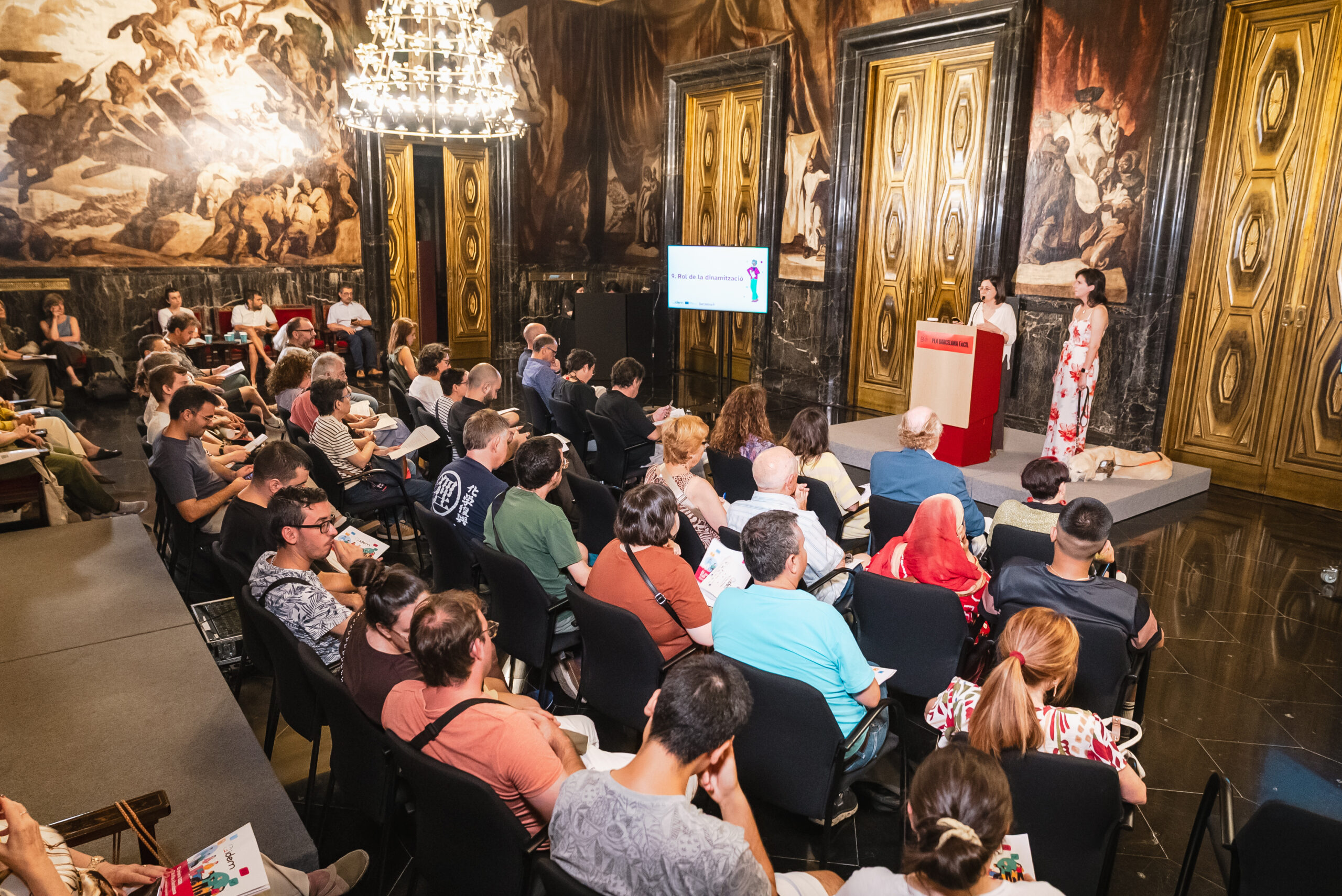
We are proud to announce iDEM project has presented the outcomes of its Barcelona pilot at the City Council, closing a successful testing phase focused on making public participation more accessible through technology.
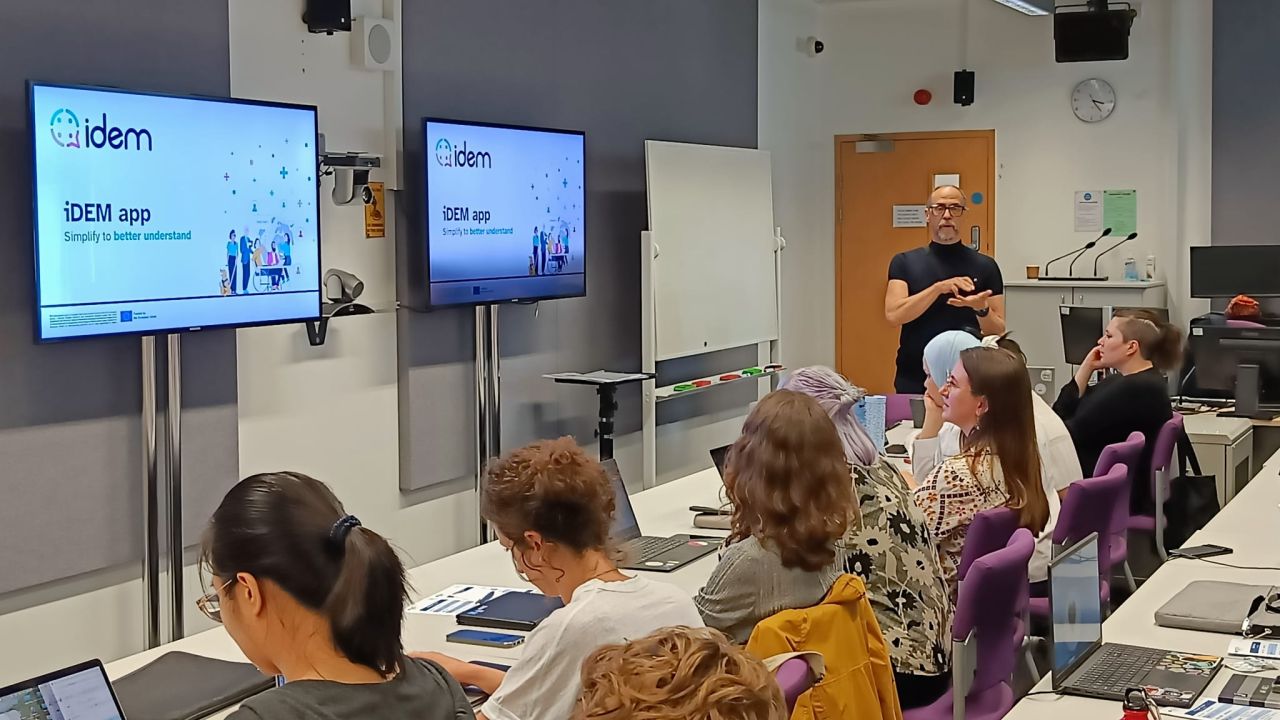
The pilot to test the iDEM app, held in April and May, involved 30 people. During several sessions and practical debate, participants used the app to better understand complex information, follow the discussion and share their ideas about public spaces in the city. The elderly and people with intellectual disabilities in Barcelona as well as newcomers to the city have tested the new app prototype, designed by the iDEM research project, led by UPF, and supported by Barcelona City Council, with the collaboration of the Municipal Institute for People with Disabilities, and the Barcelona Ombuds Office.
During the presentation of results it was also highlighted the importance of working with local institutions, such as the Municipal Institute for People with Disabilities of Barcelona and the Barcelona Ombudsman’s Office, to make public participation easier and more accessible.
The iDEM app allows users to paste blocks of text or take photos of official documents and receive a simplified version instantly. This helps remove one of the first barriers to taking part: understanding the information.
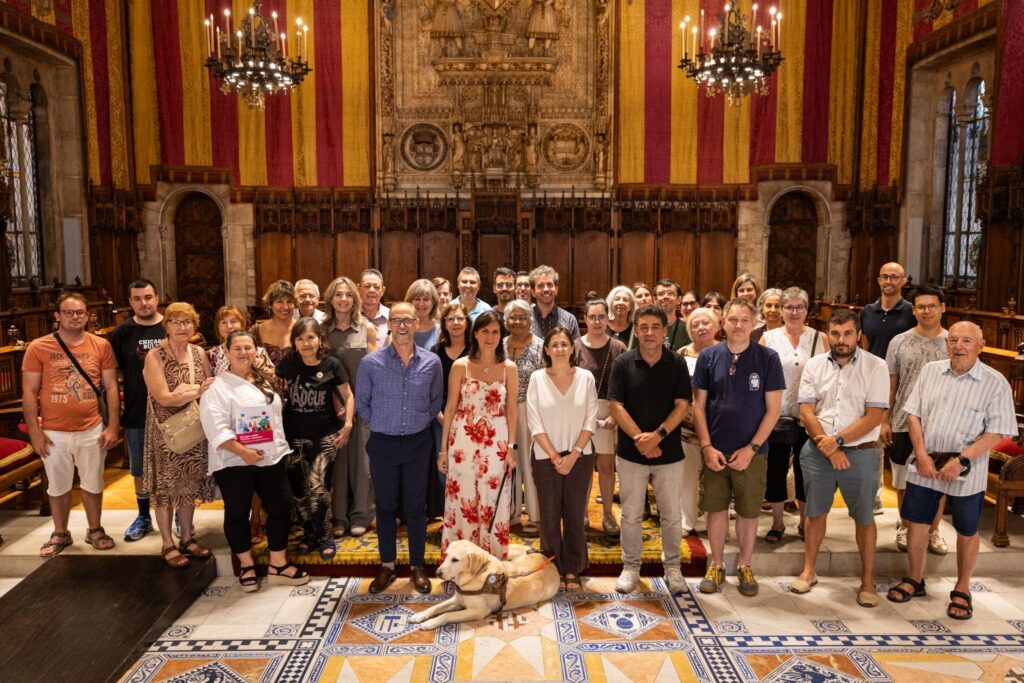
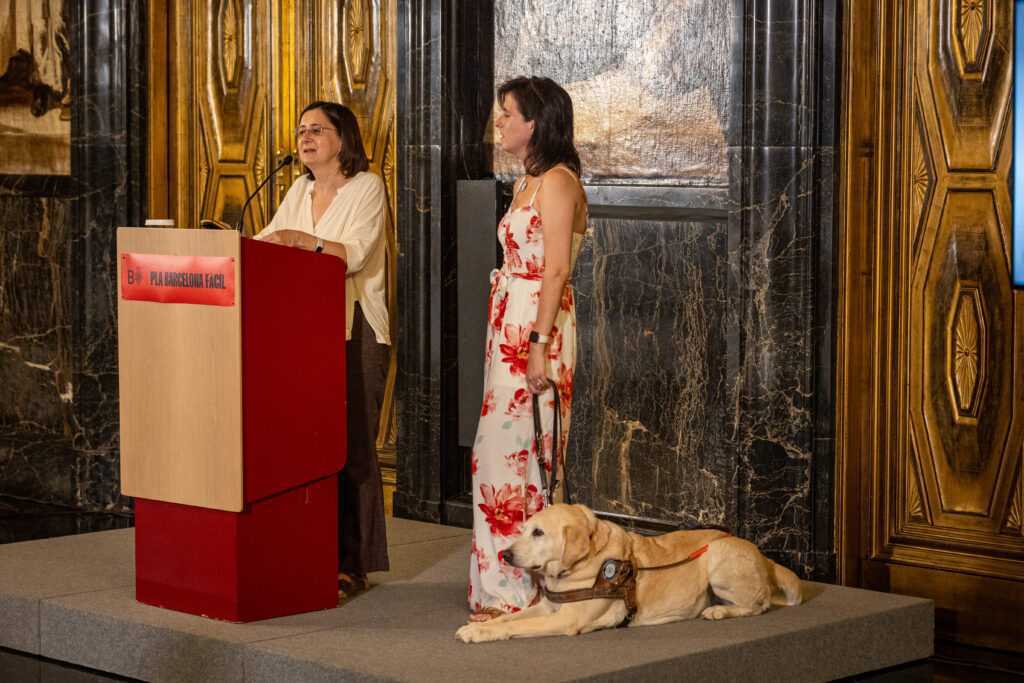
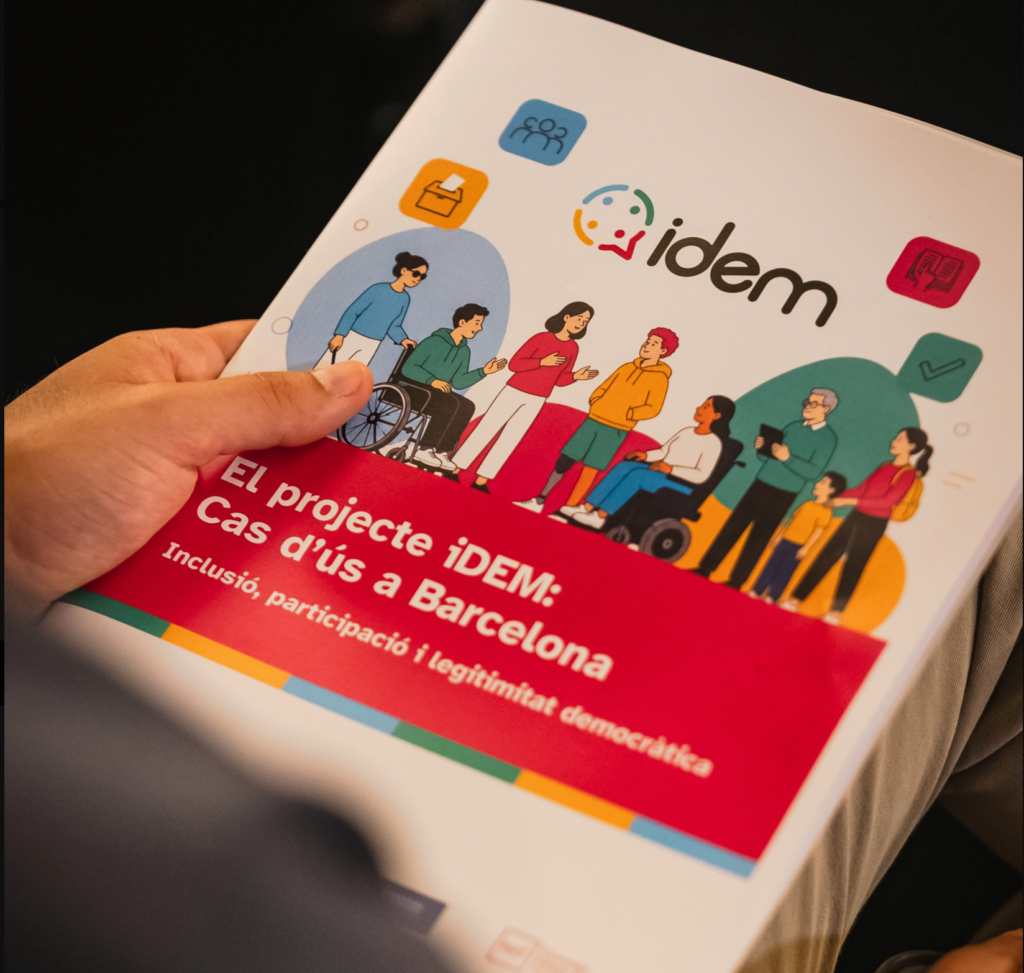
The Barcelona use case: Inclusion, participation and democratic legitimacy.
The Barcelona experience shows that technology can help more people join public debates and contribute to decisions about their city, especially when it is tested in real situations and designed around people’s needs. The Barcelona Use case has developed a free to download handbook explaining the whole process. You can explore and download the citizens’ decalog of recommendations: https://cibsimplewebs.blob.core.windows.net/idemproject/IDEM_Recomendaciones_Barcelona.pdf
An interdisciplinary project to put AI at the service of inclusive democracy
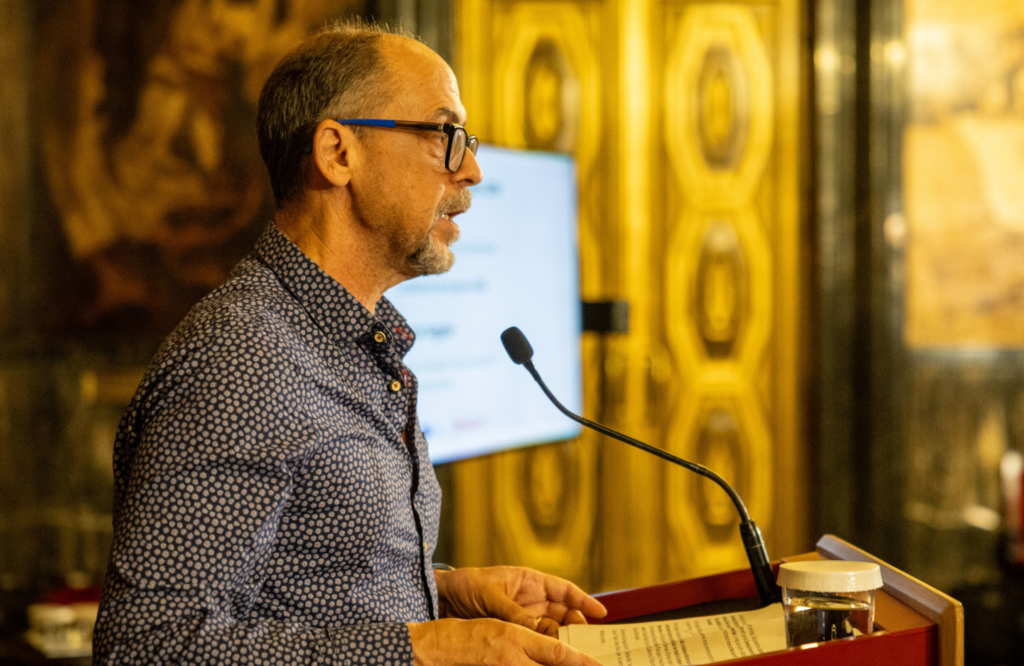
The iDEM project sets out from an interdisciplinary perspective. At UPF, the departments of Engineering and Law are involved. The project coordinator is Horacio Saggion, a full professor of computer science and AI of the TALN (Natural Language Processing) research group of the UPF Department of Engineering. Saggion, who spoke at Tuesday’s presentation, said: “The technology has been developed not purely technically, but is the result of collaboration between several experts to ensure its real usefulness. The app uses natural language processing (NLP) and generative AI technologies to reduce the existing gap in access to complex information”.
At the UPF Department of Law, the principal investigator of iDEM is Josep Lluís Martí, a professor of Philosophy of Law and a researcher in the theory of democracy, who believes that: “Democracy implies that all citizens should be able to participate in self-government and that such inclusion should be effective, not merely formal (…). Hence it is essential that research should explore how technology can help us make a qualitative leap in this challenge to effectively include everyone”.
Speaking on behalf of the local government, the councillor responsible for the area of Health and People with Disabilities, Marta Villanueva, said: “Barcelona wishes to take a step forward in improving cognitive accessibility, so that all people can move their life projects forward with the greatest possible personal autonomy. Innovation projects allow us to reflect and seek solutions to transform our reality: in the specific case of iDEM, we want the city’s participatory processes to be more receptive and inclusive for all, regardless of skills and abilities. Barcelona gains in its wealth of points of view and participation is fairer and more equitable”.
The Barcelona Ombuds Officer, David Bondia, added: “For democracy to be real, everyone must be able to understand what is being said and be a part of it. Projects like iDEM have great social value because they help break down barriers and enable more people to make their voices heard. This brings us closer to being a fairer and more inclusive city”.